
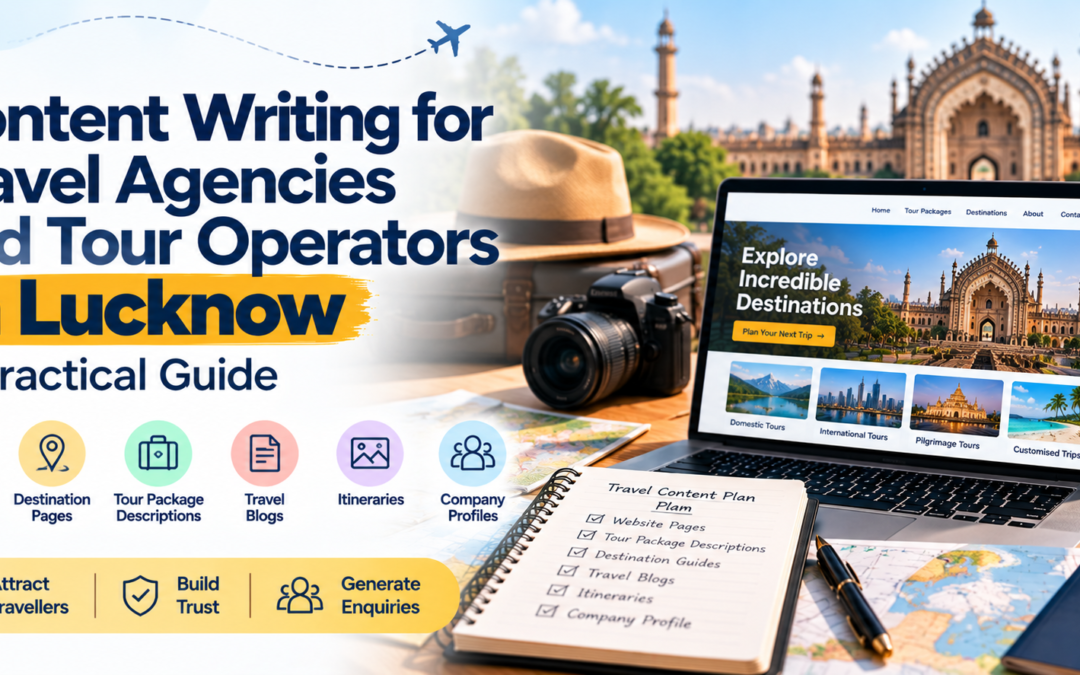
Travellers often research destinations, compare tour packages, check itineraries, and review travel services before making a booking. For travel agencies and tour operators, this creates an opportunity to reach potential customers through a well-structured website and useful online content.
However, simply listing destinations and package prices may not be enough to convince a traveler to inquire. Your website needs to explain what makes your packages suitable, what travellers can expect, and how they can plan their trips with confidence.
This is where content writing for travel agencies in Lucknow becomes important.
Whether you offer domestic holidays, international tours, family vacations, religious trips, corporate travel, or customized itineraries, effective content can help you present your services clearly and reach people searching for travel options.
Why Do Travel Agencies in Lucknow Need Professional Content Writing?
Travellers usually compare several options before choosing a travel agency. They want to understand the itinerary, inclusions, accommodation, transport arrangements, costs, and support available during the trip. Professional content helps travel businesses answer these questions and communicate their value.
1. Improve Search Engine Visibility
Potential customers may search for holiday packages, destination tours, honeymoon trips, or travel agents in Lucknow. Search-focused content helps your website target relevant queries.
Examples: travel agency in Lucknow; domestic tour packages from Lucknow; international tour packages from Lucknow;
family holiday packages from Lucknow; honeymoon packages from Lucknow; religious tour operators in Lucknow; customized tour packages from Lucknow.
Each page should address a specific search intent and provide information that genuinely helps travelers. Avoid repeating the same keyword excessively. Read SEO content writing vs. regular content writing for more context.
2. Build Trust Before Travellers Book
Travel bookings often involve advance payments, fixed dates, accommodation arrangements, and transport commitments. Customers need clear information before they decide. Explain what each package includes and excludes, cancellation terms, payment conditions, and important travel requirements. Where applicable, include accommodation categories, transfers, sightseeing, meals, and customer support. Keep information accurate and consistent with actual offerings.
3. Generate More Qualified Enquiries
A travel website should help visitors move from browsing to planning a trip. Detailed package pages, clear itineraries, and relevant calls to action can encourage potential customers to share their travel requirements.
Useful calls to action: Get a Customized Tour Plan; Request a Package Quote; Enquire About This Tour; Plan Your Next Holiday; Speak to a Travel Consultant.
You can ask visitors for their destination, travel dates, number of travellers, and approximate budget to help your team respond with relevant recommendations.
4. Highlight What Makes Your Agency Different
Many travel agencies promote similar destinations. Your content should explain what distinguishes your services. You might specialize in family holidays, group tours, religious travel, corporate travel arrangements, or customized international itineraries. Explain your actual strengths, service process, destination expertise, and support arrangements. Avoid unsupported claims such as guaranteed lowest prices.
Types of Content Travel Agencies and Tour Operators Should Invest In
A strong travel content strategy combines service pages, detailed tour descriptions, destination guides, and helpful travel resources.
1. Travel Agency Website Content
Your website introduces your business and helps visitors understand the travel services you provide. Important pages may include the homepage, about us, domestic tour packages, international tour packages, family holiday packages, honeymoon packages, group and corporate tours, religious and pilgrimage tours, customized travel planning, and contact and inquiry pages.
Each page should have a clear purpose. A domestic tour page should explain the destinations and packages available within India. An international tour page should focus on relevant overseas destinations, itinerary options, travel requirements, and package inclusions.
If you need support with website copy and service pages, explore WordsVanq’s content writing services.
2. Tour Package Description Writing
Tour package descriptions help travellers understand the experience, itinerary, and services included in a trip.
Basic example: “Five-day holiday package to Kerala with sightseeing and hotel accommodation.”
Improved example: “Explore Kerala with a five-day holiday package featuring selected destinations, hotel accommodation, and planned sightseeing. The itinerary can help travelers organize their trip around the experiences included in the package. Contact our team to confirm travel dates, accommodation options, inclusions, exclusions, and the final package price.”
An effective package page should include the package name and destination, trip duration, day-wise itinerary, accommodation, transport, meals and sightseeing inclusions, exclusions, optional activities, departure dates, pricing, booking conditions, cancellation and payment terms, and a clear enquiry CTA.
3. Destination-Specific Landing Pages
Destination pages help travel agencies attract people researching specific places. Depending on your actual services, you might create pages for Kashmir, Kerala, Goa, Rajasthan, Dubai, Singapore, or Thailand.
Include destination highlights, recommended trip duration, sample itinerary, available packages, best time to visit, practical travel tips, accommodation and transport options, FAQs, and an enquiry form. Avoid creating pages that only replace one destination name with another. Each page should offer distinct, accurate information.
4. Travel Blog Writing
Travel blogs answer questions people ask while researching destinations and planning holidays. Useful topics include:
* How to Plan a Family Holiday from Lucknow
* What Should You Consider Before Booking an International Tour Package?
* A First-Time Traveller’s Guide to Planning a Trip to Dubai
* How to Choose the Right Honeymoon Package
* What to Check Before Booking a Group Tour
* How to Compare Travel Packages Before Making a Booking
* What Should You Pack for a Family Holiday?
* How to Plan a Religious Trip from Lucknow
Choose topics that align with your destinations, customer base, and available services. Verify visa rules, entry requirements, transport schedules, safety guidance, and other time-sensitive details before publication. See types of content that drive traffic to a website for more ideas.
5. Itinerary Writing
A clear itinerary helps travelers understand how their trip will unfold. Instead of listing destinations without context, explain planned activities and travel arrangements for each day.
Day 1: Arrival and Local Exploration. Arrive at the destination, transfer to accommodation, and explore nearby attractions if time permits.
Day 2: Sightseeing and Local Experiences. Visit the attractions listed in the confirmed itinerary, allowing time for travel and planned activities.
Day 3: Departure. Complete checkout and transfer to the departure point according to agreed arrangements.
This is a sample structure. Actual itineraries should reflect confirmed transport, timings, sightseeing arrangements, and package inclusions.
6. Travel Brochures and Company Profiles
Travel brochures and company profiles support marketing campaigns, sales discussions, partnerships, and customer presentations. They can communicate services, destination coverage, group tour offerings, and booking processes. Useful content includes company introduction, travel services, destination and package categories, group and corporate travel, customized itinerary options, booking and payment process, customer support, and contact details.
How SEO Content Writing Helps Travel Agencies Attract Customers
Search engine optimization helps search engines understand your website and match relevant pages with users’ queries. For travel businesses, the aim is to connect travelers with useful content at different stages of their decision-making process.
Target Different Search Intent
Some people are exploring destinations, while others are comparing packages or looking for an agency to handle their booking. Your website should address these different needs.
| Search intent | Example search | Recommended content |
|---|---|---|
| Informational | Best time to visit Kerala | Destination guide |
| Package research | Dubai tour package from Lucknow | Tour package page |
| Service-based | Travel agency in Lucknow | Main service page |
| Comparison | How to compare international tour packages | Informational blog |
| Custom planning | Customised family holiday package | Custom travel service page |
Use Relevant Keywords Naturally
Keywords help describe what a page offers. For a page targeting travel content writing services in Lucknow, related phrases might include travel website content, tour package descriptions, travel blog writing, itinerary writing, and destination page content. Use these terms where they fit the topic. Focus on answering the reader’s question rather than meeting an arbitrary keyword-density target.
Build a Strong Internal Linking Structure
Internal links connect related pages and help visitors discover relevant information. A blog about planning a family holiday can link to family tour packages, destination pages, and an inquiry form. A destination guide can link to a relevant package page when the agency actually offers that destination. Read SEO content writing vs. regular content writing. Use descriptive anchor text and ensure every link adds value.
Keep travel information updated.
Travel packages can change with seasons, airline schedules, hotel availability, local conditions, and supplier prices. Review important pages regularly. Update outdated package details, remove unavailable offers, and verify information before promoting it. Communicate limited departure dates or seasonal availability clearly.
Common Content Writing Mistakes Travel Businesses Should Avoid
1. Writing vague package descriptions. Provide itinerary details, inclusions, exclusions, and relevant conditions.
2. Publishing duplicate destination pages. Create useful, destination-specific content that reflects actual offerings.
3. Hiding important package details. Make trip duration, accommodation, transport, meals, exclusions, and booking conditions easy to find.
4. Making unsupported promises. Avoid guaranteeing weather, visa approvals, specific experiences, or the lowest prices.
5. Ignoring mobile users. Use readable headings, concise paragraphs, accessible enquiry forms, and clear calls to action.
6. Publishing outdated travel information. Review prices, entry rules, departure dates, and hotel details before publication.
7. Forgetting the booking journey. Guide visitors towards requesting a quote, viewing an itinerary, or speaking to a travel consultant.
How to Choose a Content Writing Agency for Your Travel Business
If you plan to outsource content creation, select a provider that understands your marketing goals and the information travellers need before booking.
Industry and Destination Understanding
Your content partner should understand the differences between tour package pages, destination guides, itineraries, and general travel blogs. They should research unfamiliar destinations and ask for verified package details rather than inventing inclusions or arrangements.
SEO and Content Planning
Look for a provider that can map keywords to relevant pages, plan useful blog topics, structure internal links, and maintain a consistent publishing schedule. The strategy should support your business goals rather than focus only on traffic.
Research and Accuracy
Travel content often includes changing information about destinations, prices, visa requirements, entry conditions, and transport. Check how the writer verifies facts and handles time-sensitive details. Your team should review package-specific information before publication.
Clear Deliverables and Communication
Agree on scope, number of pages or articles, research requirements, revision process, deadlines, and publishing responsibilities. Read content writing rates in India to understand factors that influence content pricing.
How WordsVanq Can Support Travel Agencies and Tour Operators
Travel businesses need content that explains their services clearly, helps travellers compare options, and supports their online marketing goals. WordsVanq provides content writing support for businesses that need structured website content, SEO articles, service pages, and business-focused copy.
Website content writing: Homepage, service pages, and company information.
Tour package descriptions: Clear copy based on confirmed itineraries and inclusions.
Destination landing pages: Useful content for destinations and travel services you offer.
SEO blog writing: Articles that address travellers’ questions and relevant search intent.
Itinerary and brochure writing: Structured content for travel planning and promotional materials.
Ongoing content support: Consistent planning, writing, and editorial updates.
The right content plan depends on your destinations, package types, target audience, and marketing objectives. Visit WordsVanq to explore our content writing services and discuss your requirements.
Frequently Asked Questions
1. Why is content writing important for travel agencies in Lucknow?
Content writing helps travel agencies explain their packages, provide destination information, answer travellers’ questions, and improve the relevance of their website for search queries. Useful content can encourage visitors to request itineraries or package quotes.
2. What types of content do travel agencies need?
Travel agencies commonly need website copy, tour package descriptions, destination landing pages, itineraries, travel blogs, company profiles, brochures, and FAQs. The right mix depends on their services and target audience.
3. Can SEO content writing help travel agencies get more bookings?
SEO content can help relevant pages attract visitors who are researching destinations or looking for travel services. Actual bookings also depend on pricing, package suitability, reputation, website usability, customer service, and the booking process.
4. How often should a travel agency publish blogs?
There is no universal publishing frequency. Choose a realistic schedule based on resources and marketing goals. Prioritise useful, well-researched content over publishing articles that repeat existing information.
5. What should a tour package description include?
Include the destination, duration, itinerary, accommodation, transport, meals and sightseeing inclusions, exclusions, pricing, booking conditions, and a clear enquiry CTA. Confirm all package details before publication.
6. How can travel agencies attract customers through website content?
Travel agencies can create service pages, destination guides, package descriptions, and helpful travel-planning articles. Relevant internal links and clear calls to action can guide visitors towards requesting a quote or discussing their travel requirements.
7. Should a travel agency create separate pages for every destination?
Separate destination pages can be useful when the agency offers relevant packages or has meaningful information to share about each destination. Each page should provide distinct value rather than duplicate content with a different destination name.
Conclusion
Travel agencies and tour operators need more than a list of destinations to build a strong online presence. They need clear website copy, detailed tour package descriptions, useful destination guides, and informative articles that help travellers plan their trips.
A structured approach to content writing for travel agencies in Lucknow can help businesses communicate their offerings, support search visibility, and encourage potential customers to enquire about suitable packages.
Start by improving your main service pages, creating detailed package descriptions, and answering the questions travellers ask before booking. Keep information accurate, link related pages naturally, and review website performance to understand which content attracts relevant visitors.
If your travel business needs professional website content, SEO blogs, destination pages, or tour package copy, explore WordsVang to discuss a content plan suited to your goals.