
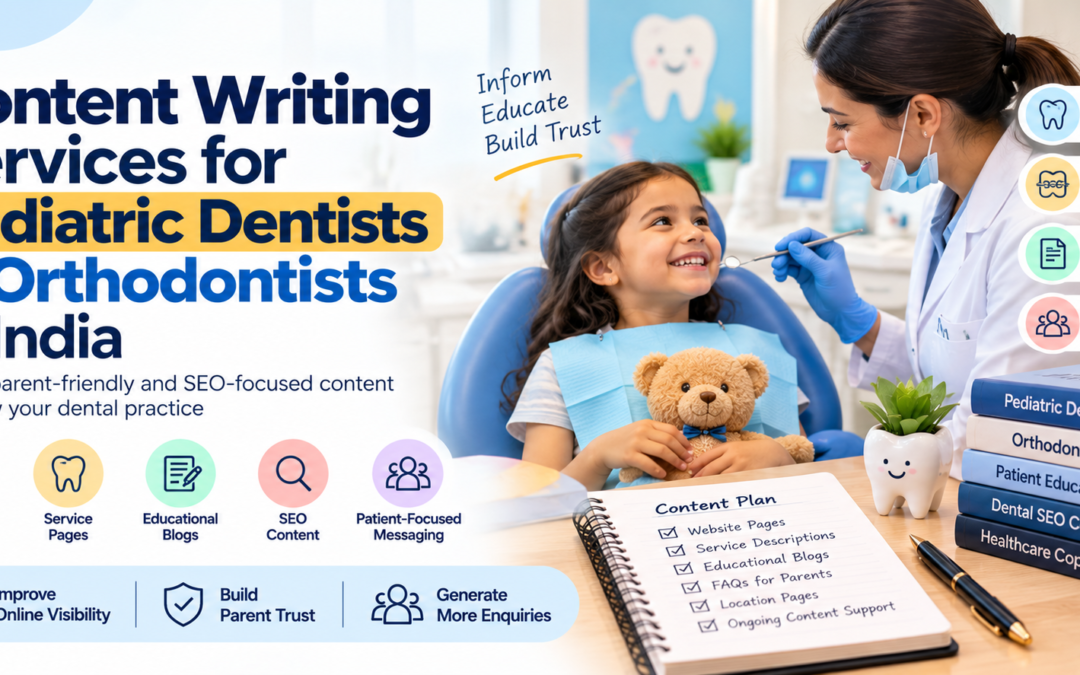
Choosing a dentist for a child or finding the right orthodontic treatment involves more than finding a nearby clinic. Parents and patients want to understand the dentist’s expertise, available treatments, and what to expect. Dental practices need website content that explains specialized services clearly, answers common questions, and helps visitors decide what to do next.
This is where content writing services for pediatric dentists and orthodontists in India can help. At WordsVanqu, we approach specialized content writing by connecting audience needs, service information, search intent, and clear communication.
A Practical Example: Building a Content Strategy for a Dental Practice
Consider a hypothetical clinic that offers pediatric dental care and orthodontic consultations. Its website lists services but provides limited explanations, making it difficult for visitors to find answers. This illustrative example shows how WordsVang’s content planning approach could address those gaps. It is not a claim about a specific client engagement or measured results.
Step 1: Identify the Audience and Its Needs
For pediatric dentistry, the audience may include parents of infants, toddlers, school-age children, and teenagers. For orthodontics, it may include parents exploring treatment for children, teenagers considering braces, and adults interested in alignment options. A content plan should reflect these different questions.
Step 2: Organize the Website Around Core Services
A useful website structure may include a homepage, dentist profiles with verified qualifications, pediatric dentistry pages, orthodontic treatment pages, preventive and restorative care information, parent and patient education resources, FAQs, and contact or appointment pages. Each page should have a clear purpose and avoid unnecessary duplication.
Step 3: Write Service Pages in Accessible Language
Dental terminology can make websites difficult for non-specialists. A writer should preserve clinical accuracy while explaining concepts simply.
Generic: “We provide preventive and restorative dental procedures for pediatric patients.”
More helpful: “Our pediatric dental services help families care for children’s teeth at different stages of development. Depending on a child’s needs, the dentist may recommend preventive examinations, fluoride treatments, sealants, or treatment for tooth decay. The dentist will explain the recommended procedure and discuss suitable options with the parent or caregiver.”
The treating dentist should review clinical content before publication.
Step 4: Develop an SEO Blog Strategy
Service pages explain what a clinic offers. Blogs answer questions parents and patients may have before booking. Potential topics include:
• When Should a Child First Visit a Dentist?
• How to Prepare a Child for a Dental Appointment
• Why Are Baby Teeth Important?
• What Parents Should Know About Dental Sealants
• What Happens During an Orthodontic Consultation?
• Braces vs. Clear Aligners: Questions to Discuss with an Orthodontist
• How to Care for Teeth During Orthodontic Treatment
Each article should address a distinct question and link to a relevant service page. Read SEO content writing vs. regular content writing for more on search-focused content.
Step 5: Use Clear Calls to Action
Content should help visitors understand the next step without pressuring them. Suitable CTAs include “Explore Pediatric Dental Services,” “Learn About Orthodontic Treatments,” “Meet the Dentist,” “Contact the Clinic,” and “Request an Appointment.” Match each CTA to the page’s purpose.
How WordsVanq Approaches Dental Content Writing
Specialized healthcare content requires more than inserting keywords into an article. It involves understanding the audience, organizing information, maintaining accuracy, and communicating services in language readers can understand.
Audience and Search Intent Research
We identify the questions the intended audience is likely to ask, the services the practice provides, and the information visitors may need before contacting the clinic. This helps establish priorities for service pages, educational articles, and location-specific content.
Website Content Planning
We organize content around the practice’s actual services and audience needs. The goal is to make the website easier to navigate, reduce repetition, and give each page a clear purpose.
Healthcare-Focused Copywriting
We turn approved service information into clear, reader-friendly copy while preserving clinical meaning. We avoid unsupported treatment claims, guaranteed outcomes, and wording that could mislead patients. Clinical review remains essential for treatment recommendations, risks, and patient-care information.
SEO Content Development
We incorporate relevant keywords naturally into titles, headings, body copy, and internal links. We also consider search intent, page structure, and opportunities to connect articles with service pages. The goal is useful content, not pages that repeat keywords without answering questions.
Consistent Content Support
Practices may need new service pages, educational articles, website updates, or location-specific content over time. An ongoing plan helps maintain consistency and update information as services change. Explore WordsVang’s content writing services.
What Can a Strong Content Strategy Support?
A well-planned strategy can support clearer service communication, a more useful website experience, broader topical coverage, better-informed inquiries, and consistent brand communication. These are potential benefits, not guaranteed outcomes. Actual performance depends on competition, website quality, local search demand, clinical credibility, technical SEO, and the practice’s overall marketing strategy. This article does not attribute specific ranking improvements, enquiry growth, or conversion figures to the illustrative example.
Common Content Mistakes Dental Practices Should Avoid
1. Using excessive medical terminology. Explain unfamiliar terms and use straightforward language.
2. Making unsupported clinical claims. Avoid guarantees about pain-free treatment, results, or complete protection from dental problems unless clinically appropriate and properly qualified.
3. Publishing generic service pages. Explain what the service involves and what patients can expect.
4. Ignoring local search intent. Communicate the practice’s location and service coverage accurately.
5. Neglecting internal links. Connect educational articles with relevant service pages.
6. Publishing without clinical review. Establish a review process for treatment information, risks, and recommendations.
How WordsVanq Can Support Pediatric Dentists and Orthodontists
WordsVanq helps businesses communicate specialized services through structured website content, SEO articles, and audience-focused copywriting. Support may include:
Website content writing: Homepage, About Us, and core service pages.
Dental service page copywriting: Clear explanations based on dentist-approved information.
SEO blog writing: Educational articles that address common parent and patient questions.
Local SEO content: Location-specific pages that reflect the clinic’s actual service area.
FAQs: Clear answers to common service and appointment questions.
Ongoing content support: Content planning, writing, revisions, and updates.
The scope depends on the practice’s website, services, audience, and priorities. Our focus is content that communicates expertise clearly and supports a useful website experience. Visit WordsVanq to discuss your requirements.
Frequently Asked Questions
1. Why do pediatric dentists and orthodontists need specialized content writing?
They serve audiences with specific questions about children’s dental care and orthodontic treatment. Specialized content explains services, addresses concerns, and presents clinical information in accessible language while maintaining accuracy.
2. What content should a dental website include?
A dental website may include a homepage, dentist profiles, service pages, treatment information, educational articles, FAQs, location information, and appointment details.
3. Can SEO blog writing help a dental practice attract patients?
SEO blog writing can help a practice address relevant search queries and provide useful information. Enquiries also depend on local competition, reputation, website usability, service availability, and other marketing factors.
4. What topics should pediatric dental blogs cover?
Useful topics include first dental visits, baby teeth, preventive care, oral hygiene habits, dental sealants, cavity prevention, and preparing children for appointments. A qualified dentist should review clinical information before publication.
5. What topics should orthodontic blogs cover?
Potential topics include orthodontic consultations, braces, clear aligners, retainers, oral hygiene during treatment, and questions patients should ask their orthodontist. Treatment suitability should be reviewed by a qualified clinician.
6. How does WordsVanq approach healthcare content writing?
WordsVanq considers audience needs, search intent, content organization, keyword relevance, internal linking, and editorial quality. A qualified healthcare professional should check clinical information before publication.
7. How often should a dental practice publish blogs?
The right frequency depends on resources, priorities, and the ability to review content accurately. A consistent schedule of useful, well-researched articles is preferable to repetitive content.
Conclusion
A dental website should do more than list treatments. It should help parents and patients understand the practice’s services, find answers to common questions, and make informed decisions about dental care.
A structured approach to content writing services for pediatric dentists and orthodontists in India can support clearer communication, relevant search visibility, and a more useful website experience. The process begins with understanding the audience, organizing service pages, developing educational content, and maintaining clinical accuracy.
At WordsVanq, we bring a structured approach to website copywriting, SEO content, and specialized business communication. Explore WordsVanq to discuss your content writing requirements.